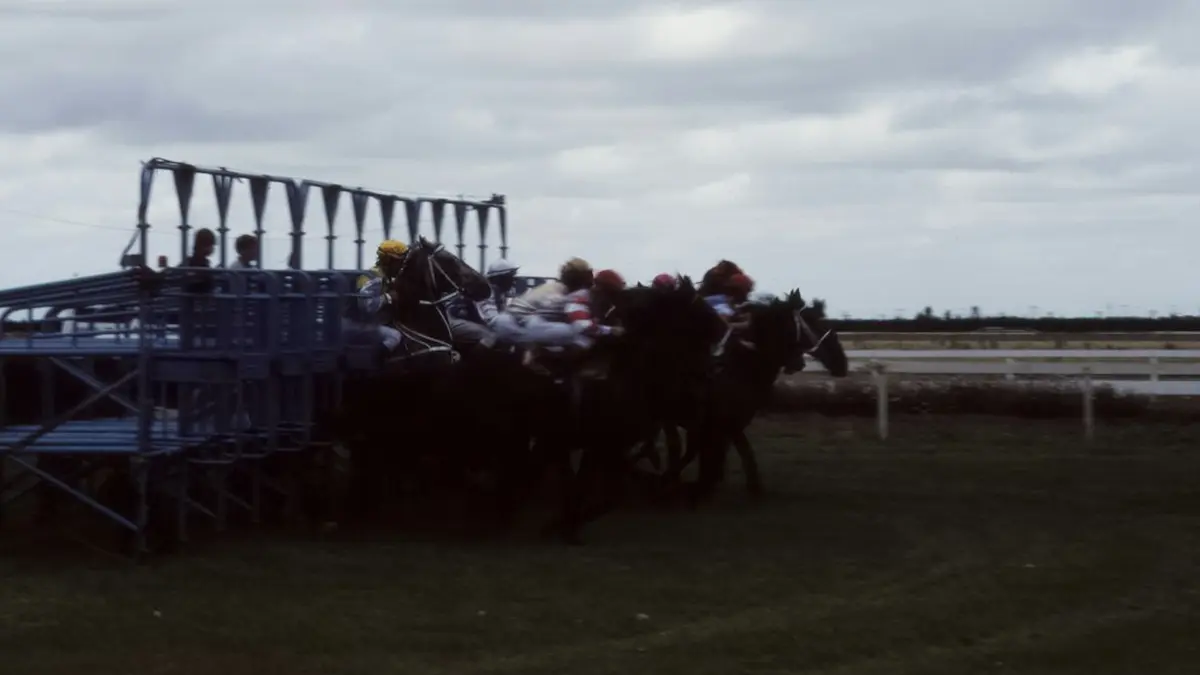
Post 5 has produced more Kentucky Derby winners than any other stall since the starting gate came in for the 1930 Derby: 10 from 96 starters, a 10.4% win rate. Post 17 is the only stall never to produce a winner, 0 for 46, and the rail, post 1, has not won since Ferdinand in 1986. Those are Churchill Downs' own figures through the 2025 Derby (kentuckyderby.com).
The table gives all 20 stalls. Read it with the sample sizes in view: the inside posts have each run close to a hundred times, the outside ones far fewer, because fields were smaller for much of the period and the Derby has been capped at 20 starters only since 1975 (Churchill Downs). Post 20, with the best win rate of all at 10.5%, has had 19 starters and two winners.
Win and in-the-money record by post, 1930 to 2025
Kentucky Derby post position record, 1930 to 2025
| Post | Starts-1st-2nd-3rd | Wins | Win % | In the money % | Last winner | Last in the money | Source |
|---|---|---|---|---|---|---|---|
| 1 | 96-8-5-5 | 8 | 8.3% | 18.8% | Ferdinand (1986) | Lookin At Lee (2nd, 2017) | source |
| 2 | 96-7-6-13 | 7 | 7.3% | 27.1% | Affirmed (1978) | Sierra Leone (2nd, 2024) | source |
| 3 | 96-6-8-8 | 6 | 6.3% | 22.9% | Mystik Dan (2024) | Mystik Dan (1st, 2024) | source |
| 4 | 96-5-6-4 | 5 | 5.2% | 15.6% | Super Saver (2010) | Danza (3rd, 2014) | source |
| 5 | 96-10-8-4 | 10 | 10.4% | 22.9% | Always Dreaming (2017) | Audible (3rd, 2018) | source |
| 6 | 96-2-8-3 | 2 | 2.1% | 13.5% | Sea Hero (1993) | Good Magic (2nd, 2018) | source |
| 7 | 95-8-7-6 | 8 | 8.4% | 22.1% | Mandaloun (2021) | Journalism (2nd, 2025) | source |
| 8 | 95-9-5-5 | 9 | 9.5% | 20.0% | Mage (2023) | Mage (1st, 2023) | source |
| 9 | 92-4-6-8 | 4 | 4.3% | 19.6% | Riva Ridge (1972) | Hot Rod Charlie (2nd, 2021) | source |
| 10 | 89-9-6-11 | 9 | 10.1% | 29.2% | Giacomo (2005) | Forever Young (3rd, 2024) | source |
| 11 | 85-2-6-4 | 2 | 2.4% | 14.1% | Winning Colors (1988) | Code of Honor (2nd, 2019) | source |
| 12 | 81-3-3-4 | 3 | 3.7% | 12.3% | Canonero II (1971) | Angel of Empire (3rd, 2023) | source |
| 13 | 79-5-5-7 | 5 | 6.3% | 21.5% | Nyquist (2016) | Nyquist (1st, 2016) | source |
| 14 | 69-2-6-6 | 2 | 2.9% | 20.3% | Carry Back (1961) | Essential Quality (3rd, 2021) | source |
| 15 | 64-6-2-1 | 6 | 9.4% | 14.1% | Authentic (2020) | Authentic (1st, 2020) | source |
| 16 | 53-5-3-3 | 5 | 9.4% | 20.8% | Sovereignty (2025) | Sovereignty (1st, 2025) | source |
| 17 | 46-0-1-2 | 0 | 0.0% | 6.5% | None | Forty Niner (2nd, 1988) | source |
| 18 | 38-2-4-0 | 2 | 5.3% | 15.8% | Country House (2019) | Country House (1st, 2019) | source |
| 19 | 32-1-1-1 | 1 | 3.1% | 9.4% | I'll Have Another (2012) | Baeza (3rd, 2025) | source |
| 20 | 19-2-0-1 | 2 | 10.5% | 15.8% | Rich Strike (2022) | Rich Strike (1st, 2022) | source |
No row matches that.
Churchill Downs' figures as published on kentuckyderby.com before the 2026 draw; "in the money" is first, second or third. A post is the stall the horse actually broke from: when a horse scratches, every horse outside it moves in a stall, so in 2019 Country House, No. 20 on the program, is counted at post 18. The 2026 Derby is not included because Churchill had not published an updated chart on 1 October 2026 (see below).
Free to reuse with credit and a link to this page (CC BY 4.0).
The 2026 Derby and post 19
Golden Tempo won the 2026 Derby as No. 19 on the program, and many reports gave his post as 19. But four horses in the original field scratched, three of them drawn inside him (Right to Party at 5, The Puma at 9 and Silent Tactic at 13), and two also-eligibles, Ocelli and Robusta, drew in on the outside; 18 started (2026 Kentucky Derby). Under the same rule that put Country House at post 18 in 2019, the three scratches inside him move Golden Tempo to the 16th stall. When Churchill updates its chart, his win would be counted at post 16, not 19, and post 19's record of one winner in 32 starts (I'll Have Another, 2012) would stand.
What the record does and does not tell you
Across all 20 stalls the record adds up to 96 winners from 1,513 starters, so the average Derby starter since 1930 has won 6.3% of the time. Posts 5, 8, 10, 15, 16 and 20 sit above 9%; posts 6, 11, 14 and 17 sit below 3%. Some of that gap is real and some of it is chance, and with fewer than a hundred starts per stall the two are hard to separate, because one Derby moves a percentage a long way.
What one more winner does to a post's record
Win rate is wins divided by starts. Take two posts from the table and add one winner to each.
| Post 5 now: 10 wins from 96 starts | 10.4% |
|---|---|
| Post 5 with one more win: 11 from 97 | 11.3% |
| Post 20 now: 2 wins from 19 starts | 10.5% |
| Post 20 with one more win: 3 from 20 | 15.0% |
A single result moves post 20's rate by four and a half points and post 5's by less than one. The outside posts' numbers are the least reliable in the table for exactly that reason.
Churchill's own reading of the recent record is that nine of the last 15 winners through 2025 started from post 13 or wider, which suggests that a trip free of traffic matters more in a 20-horse Derby than saving ground on the inside (kentuckyderby.com). That fits how the race is run, with 20 horses converging on the first turn, but it is an explanation of a small gap, not a rule for betting a horse because of its stall. A horse's form, its running style and the shape of the pace matter more than where it starts; track bias covers the days when the inside or outside of a track really is better.
How the draw works
Entry to the Derby is earned on the Road to the Kentucky Derby points table, and horses beyond the top 20 on points go to an also-eligible list. The draw itself is a "pill pull": paper entry slips for each horse are shuffled and drawn one at a time, and as each slip comes out a numbered pill is drawn from a bottle to set that horse's post, as the official Derby site describes it.
The track's morning line is set after the draw, with the posts already known. It is a forecast of how the public will bet, not a prediction of the winner, and it pays nothing; final prices come from the pari-mutuel pool once betting opens. When a horse scratches, the horses outside it move in a stall and any also-eligible that draws in starts from the outside, which is why a horse's program number and its stall can differ on race day.
Three prices that get confused around the draw
| Who sets it | What it tells you | |
|---|---|---|
| Post position | The pill pull, then any scratches | Where the horse starts, and nothing about its ability |
| Morning line | The track oddsmaker, after the draw | A forecast of public betting; it does not set payouts |
| Final odds | The pari-mutuel pool | What the crowd's money says at post time; this is what pays |
A price seen weeks before the draw belongs to a different market: the Future Wager pools close before the field and the posts are set. For placing a bet once the posts are known, see Kentucky Derby betting for beginners.
Comments
No comments yet. Be the first to comment!
Leave a Comment