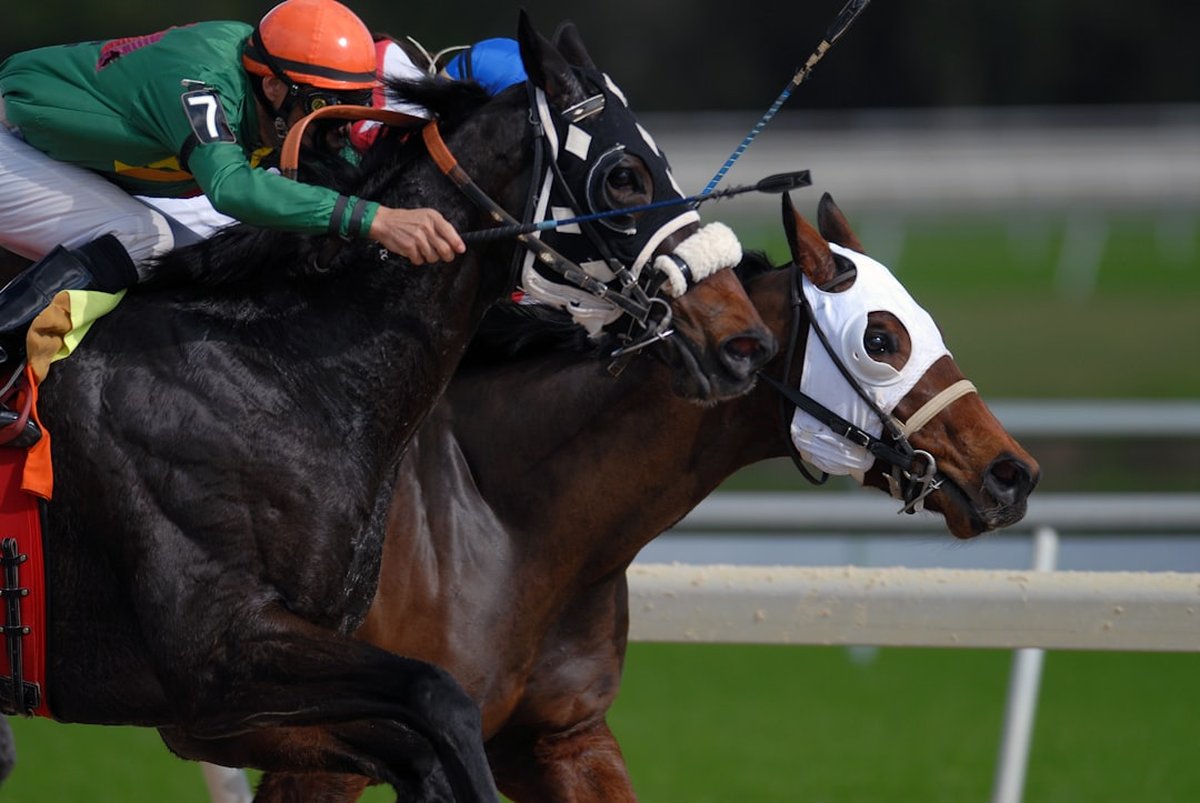
Test Score reached the wire at Del Mar on August 29 a short neck in front of Atitlan, 2:14.76 for a mile and three furlongs on turf, and by the time he was back at Fair Hill in Maryland he had bought something running does not usually buy: a paid, guaranteed stall in the Breeders' Cup Turf at Keeneland on October 30. He went off the 2.60 second choice that afternoon. Atitlan, beaten a neck, was 4.10 and has no berth. Atomic Age ran third at 24.40 and will need to find another route in.
So Test Score won two separate things in the same ninety seconds, and handicappers habitually treat them as one thing. He won a Grade 2 at Del Mar, worth $303,000, run at a distance and on a surface he handles. He also won an entry fee.
The entry fee is the part the industry is proudest of. In 2026, its twentieth year, the Breeders' Cup Challenge Series has allocated a record $6.5 million in free entry fees across 95 qualifying races in 14 countries, 50 of them in North America, each guaranteeing its winner a starting position in the corresponding division. Winners based outside Kentucky get $10,000 toward shipping. International winners get $40,000. Everyone has to be nominated by October 19.
Which is the whole mechanism, and the reason a berth is a weaker piece of information than it sounds. A Win and You're In victory certifies that one horse beat one field on one day and that somebody else is now paying its way to Keeneland. It says nothing about where that horse stands in its division, because it was never a measurement of the division. It is a subsidy attached to a result, and a subsidy that removes the cost of showing up will, reliably, bring some horses who would not otherwise have come.
Two conversion rates that disagree
Read from the qualifier's side, the record is discouraging. Forty-six Challenge Series winners started at Del Mar in 2025. Three won their divisional race: Forever Young in the Classic, Notable Speech in the Mile, Ted Noffey in the Juvenile. That is roughly one berth in fifteen converting.
Read from the race's side, the same record looks like evidence the series works. Three, four, five, sometimes seven Breeders' Cup races a year are won by horses who came through a Challenge qualifier: Wikipedia's year-by-year tally has seven in 2012, four in 2013 and 2014, six in 2015, five in 2017 and 2018, seven in 2019, five in 2020. Out of fourteen or so championship races, that is a substantial share.
Both numbers are correct, and the gap between them is the handicapping point. The pipeline has grown from 24 races in two countries at its 2007 launch to 71 races in 13 countries by 2014 and 95 races today. The count of good horses in a division did not grow with it. So the top of the qualifier pool still wins Breeders' Cup races at a healthy clip while the average berth holder gets steadily less impressive, because the denominator kept expanding and the numerator did not.
Eleven guaranteed berths exist for the 2026 Classic alone. Four are already claimed, by Skippylongstocking, Forever Young, Costa Nova and Magnitude. Seven more will be handed out between now and late October. A ticket that can be issued eleven times for one race is not scarce, and scarcity is what makes a credential mean something.
This year's crop, read three ways
Al Hudaiba, Summer Stakes, Woodbine, September 12. A Godolphin homebred by Dark Angel, trained by Charlie Appleby, 1¾ lengths clear in 1:35.66 under William Buick, into the Juvenile Turf. What matters here is not the margin but the pattern: Appleby and Godolphin have won this particular mile three times in the last six years, with Albahr in 2021 and Mysterious Night in 2022. When one barn owns a feeder race, the berth tells you about the barn's placement and its two-year-old pipeline as much as about the horse, and how Albahr and Mysterious Night then ran at the Breeders' Cup is not something the reporting on this year's race establishes.
Test Score, Del Mar Handicap, August 29. A four-year-old with a 17-6-4-3 line and $2,405,025 banked, second choice in the market before he won anything at all. This is the qualifier type worth respecting, because the berth changed his logistics and not his profile. He had already been on a Breeders' Cup undercard in 2024, losing narrowly. "He's a true racehorse," his trainer's assistant Alice Clapham said, and the form agrees.
Ocelli, Haskell Stakes, July 17. Winless in nine starts, and in the gate for a Classic qualifier. He did not win it. But his presence is the reminder that a designated race is a designated race regardless of who turns up, and that the same door which admitted Forever Young admits whoever happens to beat the field in front of them on the day.
Not a rating, not a ranking
| A Win and You're In berth | A division ranking | |
|---|---|---|
| What it establishes | This horse beat this field, this day | Where the horse sits against its division |
| How it is won | First past the post in one of 95 designated races | Season-long form against graded company |
| What it pays | Entry fee, plus $10,000 or $40,000 travel | Nothing |
| Who it leaves out | Almost nobody: 11 berths exist for the Classic | Most of the division |
The second confusion is subtler. A berth is not a declaration of intent. It is an option, exercisable by October 19, and the travel allowances exist precisely because some winners need persuading to use it. Six or seven of these qualifiers air live on NBC, FOX and Peacock, depending on which Breeders' Cup release you read, which is how a name becomes familiar to a national audience weeks before it takes money at Keeneland.
The check to run on the next winner
For the next six weeks, ask one question of every horse that punches a ticket: would this horse have been pre-entered anyway? If yes, the berth is administrative and the form stands on its own. If the honest answer is that a $40,000 allowance and a free stall are what got it to Lexington, you are looking at a starter, not a contender, and quite possibly a short price built on six televised minutes of name recognition.
Then ask what the qualifier actually was. Eight of them run at Keeneland over Fall Stars Weekend, October 2 to 4, over the surfaces the championships themselves will be run on, which makes those results worth more than a comparable win elsewhere. A Grade 2 at Del Mar in late August and a $1.75 million Grade 2 turf sprint at Kentucky Downs are not interchangeable inputs, and neither is a six-and-a-quarter-length Debutante romp by a Baffert filly against a Spinaway won by four and three-quarters in 1:11.72. The ordinary work of speed, class and form does not get suspended because a horse arrived with its entry paid, and the Keeneland surfaces will do what track bias always does to horses shipped in from elsewhere.
Test Score is at Fair Hill now, training toward a race he no longer has to qualify for. The berth is the least interesting thing about him. What recommends him on October 30 is the same thing that recommended him at 2.60 on August 29: seventeen starts, thirteen of them in the money, and a habit of not giving up a short neck.
Comments
No comments yet. Be the first to comment!
Leave a Comment